Hallmark 4: Effective pedagogies build on students’ prior learning and experience
11th August 2025
Tim Taylor
(Fourth in a series exploring the Nine Hallmarks of Great Pedagogy through the lens of Imaginative Inquiry and Mantle of the Expert)
The phrase “prior learning” can sound deceptively simple: just find out what they know and go from there. In reality, it is a complex, layered process. Prior learning is not only the last thing a child was taught, nor even the sum of their remembered facts. It is an intricate weave of experiences, misconceptions, cultural references, and emotional associations.
When we begin without attending to this prior knowledge, when we pitch content as if starting from scratch, we risk building on sand. The new structure may look secure for a time, but sooner or later the gaps will start to show. And if those gaps are filled with misunderstandings, they become harder to dislodge. As James and Pollard remind us, prior misconceptions can be some of the most stubborn barriers to new learning.
Ancient Egypt
Consider this example. It is the first lesson in a new study for the Year 4 students: Ancient Egypt. The teacher has planned an introduction, thinking carefully about how to build on the students’ existing knowledge and interests. She has chosen a resource she hopes will capture their imagination and draw them into the new inquiry, a primary source known as The Weighing of the Heart.
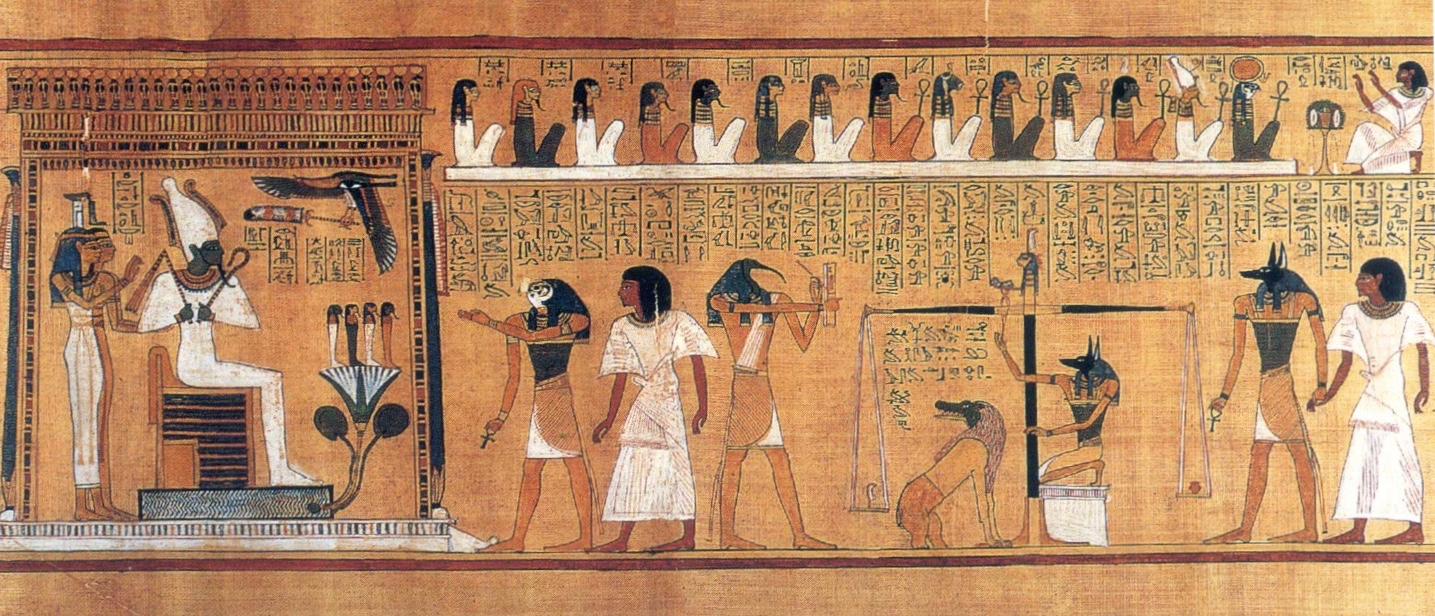
She brings out the resource and asks the students what they notice. Not What do you know about Ancient Egypt? But why not? After all, this is often the standard first question at the start of a topic and, on the surface, it feels like the right step if the aim is to find out what students already know and to build from there.
The problem is, as James and Pollard point out, students, especially younger ones, often know very little about the topic at this stage. What they do know is frequently based on misconceptions or partial truths.
Consider, for a moment, what Year 4 students are likely to know about Ancient Egypt and where that knowledge comes from. Unless they have been fortunate enough to visit the country or have sought out a documentary or book on the subject, their information will probably come from popular media such as films, cartoons, picture books, and fictional stories. As a consequence, the question What do you know about Ancient Egypt? is likely to bring up a series of guesses and half-truths that the teacher will need to unpick and correct. It risks doing little more than highlighting the students’ lack of knowledge, which is not a great start if she wants to get them onside.
Conversely, if she launches straight into a lecture about the painting and its meaning, she risks overwhelming the students with information they are not yet interested in or invested in. We have all had this experience, and it is difficult to concentrate on or process knowledge that we are not engaged with. Without a reason to listen, it is likely the information will simply bounce off them or, since our minds wander when we do not find something relevant, they will become distracted and bored. This is a problem all teachers are familiar with.
The answer to the conundrum is to start where the students are and rely on what they can do successfully. Since they are unlikely to know much about the painting or its context, the teacher can instead draw on their capacity to look closely and notice details. In this task their answers cannot be wrong, and every observation becomes a starting point for sharing the teacher’s knowledge.
For example, one of the students says they have noticed what looks like a set of scales. The teacher asks the class to look more closely at the objects on either side of the scales. One student says they think they can see a pot on one side. Another says they think they can see a feather on the other side. This causes a commotion, as the students understand how a set of scales works and that a feather cannot weigh the same as a pot.
The teacher agrees and explains that it is no ordinary feather. It is called the Feather of Truth and is being weighed against the contents of the pot, which is the man’s heart. The purpose is to decide whether the man has lived a good life and deserves to enter the kingdom of Osiris. She goes on to explain that the figures across the top of the painting are various gods who are asking the man questions about his life and judging the truth of his answers against the scales. If the scales tip against him, he will be swallowed by the monster sitting beneath them. If he tells the truth, the scales will remain steady and the trial will continue.
In this way the teacher is building on the observations of the students, the things they notice and find interesting. Each time they make an observation it is like an investment in the continuation of the session, and each time the teacher builds on their observations she is communicating her interest in what they have to say and signalling her willingness to listen and take their contributions seriously.
Starting in this way is not about building from what students think they know, but from what they can do, drawing on their reliable resources rather than their likely misconceptions and misunderstandings.
Why Mantle of the Expert helps
In Mantle of the Expert, lessons are rarely one-off sessions disconnected from what else the students are learning. Instead, they are part of an unfolding narrative, where each piece of learning informs and advances the larger goals: the development of the story and the fulfilment of the client’s commission.
In this context, the students are shortly going to take on the role of a team of archaeologists working for the Cairo Museum, who have just discovered a previously unknown tomb. Their task is to open it, catalogue its contents, and design a new exhibition to share their findings with the public.
In this way, what they have learned in the first session becomes a foundation for the work that follows, imparting knowledge and understanding that they will draw on, apply, and extend as the story develops. Each new piece of information, each skill they practise, feeds directly into their capacity to carry out their role within the fiction. The frame ensures that prior learning is not only recalled but also put to immediate and purposeful use, deepening understanding through application.
This is the spirit of Hallmark 4. MoE treats prior learning as part of an ongoing narrative, not an isolated checkpoint. Students revisit earlier moments in the story, weighing them against new findings and adjusting their interpretations as the plot unfolds. The archaeologists’ knowledge of the Weighing of the Heart will prove crucial when they open the tomb, and their ability to record precise observations will be essential for the museum’s exhibition plans. The ceremony itself is no side note; it is deeply connected to the beliefs, customs, and values of Ancient Egypt, and understanding it enriches the students’ grasp of the wider civilisation.
Building on students’ prior knowledge and experience is not a matter of simply starting from where the students are or what they are interested in. That route often leads to a dead end. Rather, it is about recognising that much of what students know, or think they know, is tangled up with misunderstandings and half-truths. For that reason, it is important to develop new learning on solid foundations, to start with accurate information and build from there. However, this is not enough on its own. It is also important to weave new knowledge and developing understanding into a wider context, a context that makes the learning both important and urgent and that leads to a meaningful and purposeful outcome.
Related articles

Why learning and having fun are not inimical
10th October 2013
Of all the arguments I’ve read, from the plethora of education bloggers over...
Mind your language – High Challenge, Low Threat
5th October 2018
Mind your language - Using language to reduce threat and increase participation in...
The Three Modes of Teaching
9th March 2017
Following a recent discussion after reading Lee Donaghy's blog, 'Building ‘abstract generalisations’ to...
Make-believe is not the same as lying
12th January 2014
Why do primary school teachers lie to their students? Some clarification In answer...